
Cover-Up (2025)
Investigating the Persistent Violence of the American State.

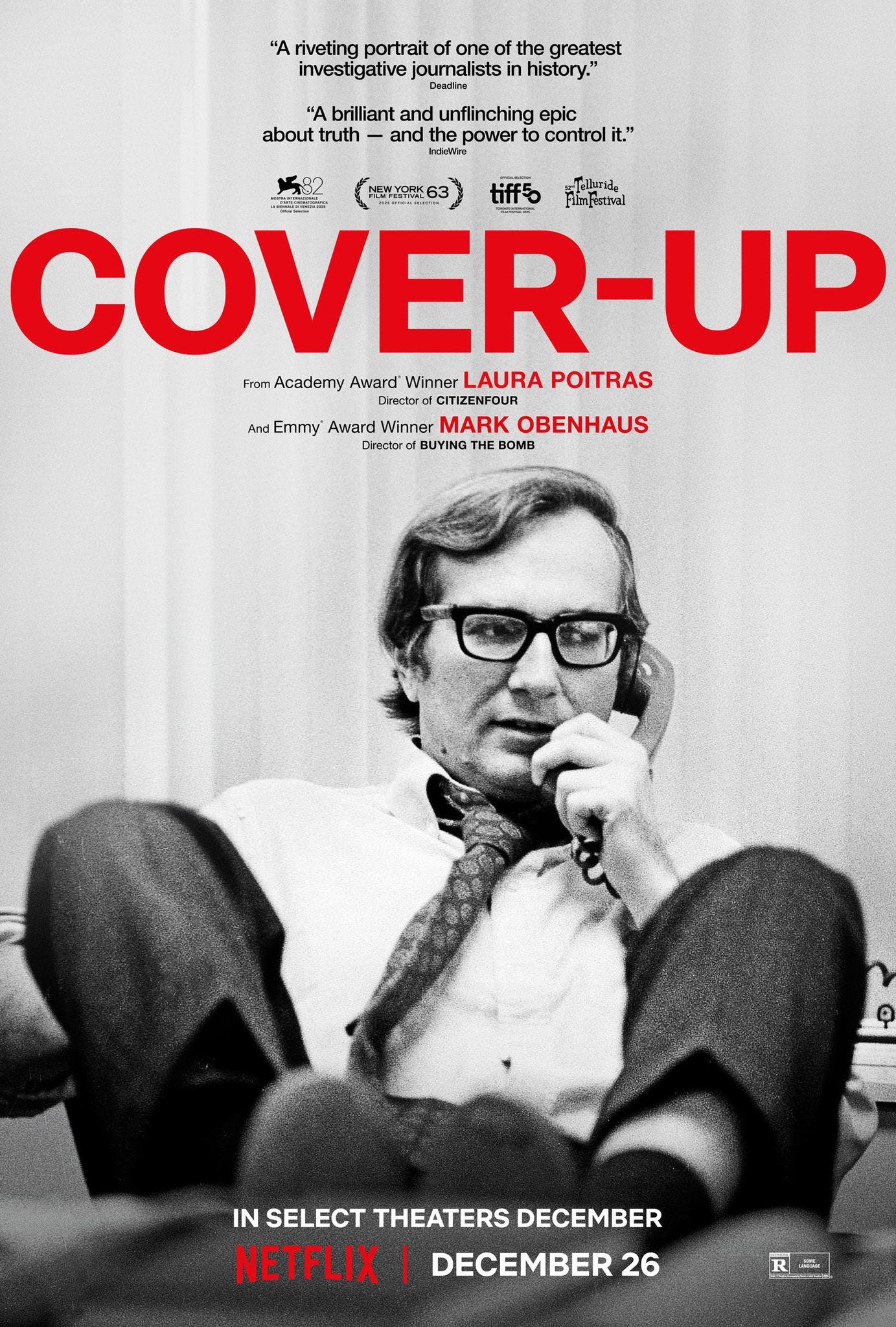
‘The power these people have is so immense. They would do anything to stay in power. Any lie. Any story. Bury everybody.”
-Seymour Hersh in Cover-Up
Cover-Up draws upon a lifetime’s worth of reporting done by Seymour M. Hersh, combined with personal testimony and archival footage, to render a vital portrait of investigative journalism and the ways it acts as a check on power, exposing military atrocities and political malfeasance that would otherwise be left to fester in obscurity by media outlets more intent on maintaining proximity to power than challenging it.


As the principal character and narrator of Cover-Up, Hersh proves a fascinating subject. He’s dedicated to his work and, like any journalist worth their salt, committed to protecting his sources. As a result, he’s more cagey on camera than some of his more media-trained peers, like Bob Woodward. Hersh is candid about his reservations and, at times, an unwilling participant in the documentary he’s a part of. His uncertainties, his relative discomfort in the spotlight, and the ceaseless well of grief and dismay that his reporting inspires within him convey an emotional authenticity that, I imagine, was part of the reason sources continually sought him out over the course of his career.
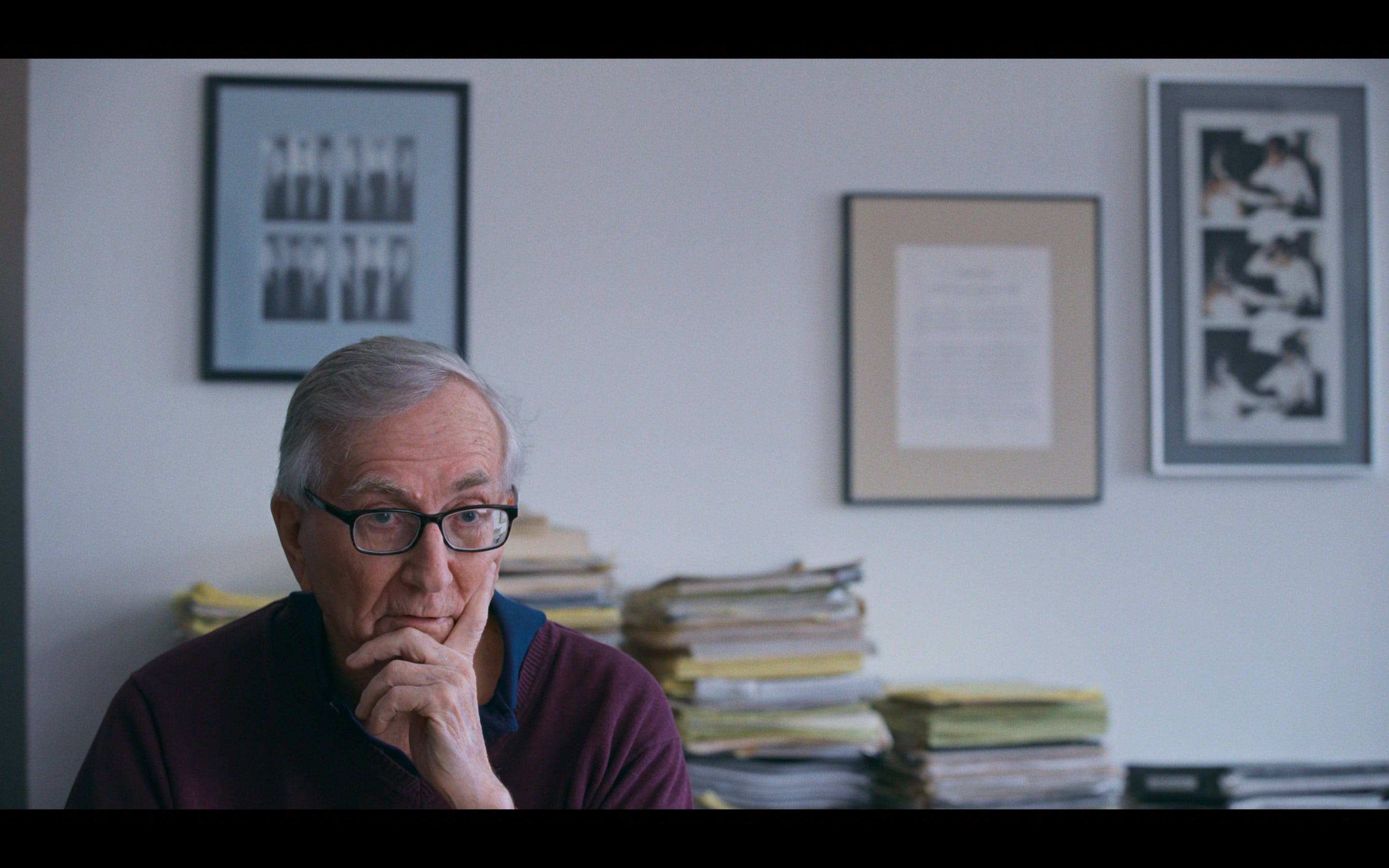
Reflecting on Cover-Up, which begins with Hersh’s exposé of American barbarity in the Vietnamese village of My Lai, it’s distressing how little has changed. And Hersh’s career, from Vietnam to Iraq and Gaza, speaks to an intractable cancer at America’s core.


The way the army dismisses American war crimes in Vietnam as the work of a few bad apples is the same institutional rot at the heart of policing in America.


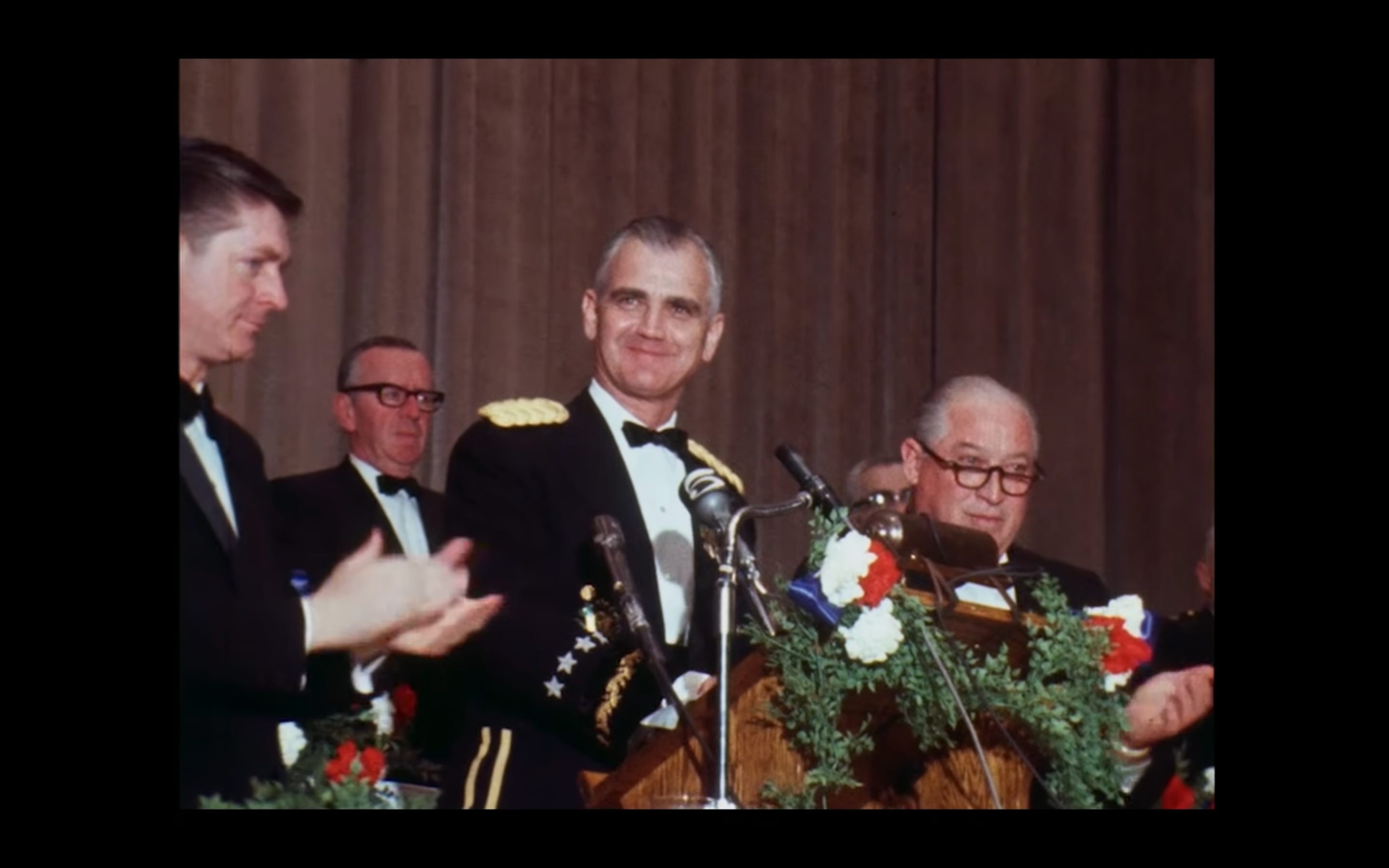
“Recently, a few individuals involved in serious incidents have been highlighted in the news. Some would have the incidents reflect on the Army as a whole. They are, however, the actions of a pitiful few. But the army as an institution should never be put on trial.”
- General Westmoreland, U.S. Army Chief of Staff (1968-1972), speaking after Hersh’s reporting on the massacre in My Lai.
We shouldn’t see the innumerable, senseless murders committed by those entrusted to “protect and serve” as evidence of systemic brutality disproportionately targeting people of color. No, such a suggestion is an “irresponsible overgeneralization” and offensive to all the cops who haven’t killed anyone on the job.
Time and time again, we are entreated not to judge the police system based on the actions of individual cops. Those bad apples can be rooted out at the individual level, we are told, as the Police unions simultaneously work to collectively insulate their members, bad apples and all, from accountability for their crimes.
“There were 14 officers that were clearly involved in covering [the My Lai massacre] up. And the charges the army eventually filed on the 14th were: dereliction of duty, failure to obey lawful regulations, and failure to duly report.
They were all either involved in murder, planning murder, or covering it up, and they were charged with failure to report.”


“And then Westmoreland finishes his four-year term, and he’s promoted! Even though everybody in the Army and in the Joint Chiefs knows he was killing civilians.”
Anyone who protects a “bad apple” is, themselves, a rotten apple. It is precisely why and how “the cover-up is worse than the crime.” So a cop need not pull the trigger to be complicit in the extrajudicial slaughter that, at this point, has essentially become officially sanctioned by the American state.
The cruelty which animates the current presidential administration — its reflexive defense of an ICE officer that murdered an American Citizen in Minnesota last week, the way government officials lie so quickly and brazenly, slandering the victim and valorizing her murderer — it all has an eerie resonance with the American government’s refusal to hold William Laws Calley Jr. accountable for the My Lai massacre in any meaningful way.
Of the many terrible truths Hersh uncovered, another which struck me was the CIA’s “Project CHAOS,” a domestic operation of the late 60s, in which our foreign intelligence service infiltrated the anti-war movement on college campuses, illegally spying on thousands of innocent American citizens in pursuit of a fictive Communist boogeyman supposedly manufacturing dissent towards America’s foreign policy in Vietnam, characterized by the wanton slaughter of civilians.


In hindsight, it’s obvious that the anti-war movement was a genuine expression of moral disgust by Americans disillusioned by their own government, not the product of an anti-American communist conspiracy. The notion is, frankly, ludicrous.
Yet the same tune of paranoid delusion echoes in the current administration’s malicious mischaracterization of Palestinian rights activists who protest on university campuses as agents of Hamas or professional ANTIFA agitators, reskinning the same hallucinatory accusations to justify extrajudicial kidnappings and unlawful deportations by masked federal agents, hiding their faces like members of the Klan.
As Cover-Up attests, the American state’s long-established penchant for violence will continue unabated, but it would go totally unchecked were it not for reporters like Hersh. Considering the countless human rights violations Hersh covered, including those at Abu Ghraib, I shudder at that prospect.


Hersh is by no means infallible. He has made mistakes in his career, from being duped by salacious forgeries of letters between JFK and Marilyn Monroe to his misguided assessment of Syrian dictator Bashar al-Assad’s character, and openly doubting Assad’s willingness to deploy chemical weapons against his own people.
“I’ve been writing about Syria because, obviously, I was pretty shocked it fell so quickly. I read this stuff now, and I say to myself, ‘I really misjudged him.’”

There were reports that Assad nerve-gassed his own people. I saw him two or three or four times, and I didn’t think he was capable of doing what he did. Period. And, um, let’s call that wrong. Let’s call that very much wrong.”
Storied as his career may be, for better and worse, Seymour Hersh is only a man, and his mistakes serve as humbling reminders of that fact.
Director: Is that an example of getting too close to power?
Hersh: Of course. What else is it? The Human Rights people were all over [Assad]. I never thought he was Mother Theresa, but I thought he was okay. But if I have made a claim in prior interviews to be perfect, I would now withdraw it. That’s all. I wasn’t perfect.
America has a violent, complicated history. Cover-Up effectively articulates many of the reasons I’m ashamed of America while simultaneously elevating an American whose life’s work reflects an enduring commitment to the American values I hold dear. They’re ideals so rarely present in American policy but are sustained by American patriots of Hersh’s ilk: crusaders committed to exposing and criticizing their country in the (possibly misguided) hope that the truth might, in the end, matter enough to make a difference.
Or, as Hersh puts it from his proverbial tightrope between overwhelming despair and unbreakable resolve:
“We are a culture of enormous violence. It’s so brutal. There’s a level you just can’t get to.”
“So why do you keep doing the work?” asks director Laura Poitras.
Hersh gazes off-camera, deep in thought. His Adam’s apple bobs as he swallows what might be a sob. With the slight tremor that comes with being 88 years old, he halfheartedly shrugs one shoulder and returns his gaze.


“You can’t have a country that does that. That’s why I’ve been sort of on the warpath. You can’t just have a country that does it, and then looks the other way.”
Of all the wars waged, Hersh’s is one of the few worth fighting.
Cover-Up is now streaming on Netflix.
Until next time, stay alert, protect your neighbors, and never capitulate to the fear Trump’s fascist regime seeks to instill.
Did anyone see the Netflix documentary on Seymour Hersh? What did you think? Let me know.
My thoughts: Hersh was always a big role model and hero of mine as a journalist. He was the investigative journalist par excellence. But something bothered me when I saw the film. A journalist who doesn’t ever reveal his sources and who writes definitive pieces based on a single anonymous source can be writing whatever he want, no checks and balances.
And, I see that with what he is writing now about Gaza. He is claiming that Israel is committing My Lai style massacres in Gaza and purposely killing innocent civilians. But where is he getting this from? An anonymous source. A Gazan woman who calls him and feeds him this information. (You see this in the film).
Why in the world should we believe her? She could very well be part of the Hamas propaganda machine which we know is top notch.
I have spoken to literally hundreds of soldiers who have been in Gaza and I always ask them the same questions: Have you ever seen a single innocent civilian purposely targeted? Have you ever seen IDF open fire at aid distribution lines? Have you ever seen any type of massacre take place? Could you ever imagine a scenario where that would happen?
The answer has always been: “absolutely not.”
My son, who is in fighting in the Golani combat brigade in Khan Yunis has told me what their rules of engagement are. Let’s just say, it is the farthest thing in the world from anything close to targeting civilians or killing innocents.
War is hell. We know that. And, especially when you are fighting a terrorist organization that uses their civilians as human shields, that hides weapons in schools and hospitals and that hides underground in populated areas where the citizens are in harms way.
Innocent people are killed. No question about it. But, the question is: who is to blame for this? The answer is plain and simple: Hamas.
Let’s not forget how this war began. There is no country in the world that would allow this terror organization to remain intact so close to its border. Israel had no choice but to go to war and eliminate Hamas.
Trust me, it is the last thing in the world Israel wants to be doing now. We have lost so so much in the last two years in ways that we can’t even begin to calculate. But this is a battle for our existence, our survival.
I feel bad for any innocent Gazan family that has suffered the horrors and misery of this war. But Israel is not at fault. Hamas is.
Israel goes out of its way time and time again to avoid civilian casualties as much as possible and even puts our boys at great risk in order to do it. If we wanted to, we could have defeated Hamas in three days of carpet bombing back in the beginning of the war and it would have been over. And, none of our soldiers would have died in the process. But we didn’t because it would have meant the death of hundreds of thousands of Gazans. And, if you believe the only reason we didn’t do that was because we were worried about our hostages there, then now that they are all out, what has stopped us? The answer is simple: MORALITY.
So, I’m sorry to say this but Hersh has gotten this entire story wrong. And, it leads me to question all of his so called “scoops.” How can you base a whole story on a single, anonymous source that is playing for the other team?
It is the epitome of irresponsible journalism.
So, it is a good film, and I recommend seeing it. But keep this issue in mind when you do!
If you want to read my weekly content subscribe to my substack: https://substack.com/@israeltake3